Garlic: From Bulb to Clinic
What Garlic is, Botanically
Garlic (Allium sativum) is a perennial bulb in the Amaryllidaceae family, the same group as onion, leek, shallot and chives. The edible bulb is a cluster of cloves, each a modified leaf base wrapped in papery sheaths. Most cultivated garlic rarely produces viable seed, so it is propagated by planting individual cloves.
A Long History as Good and Medicine
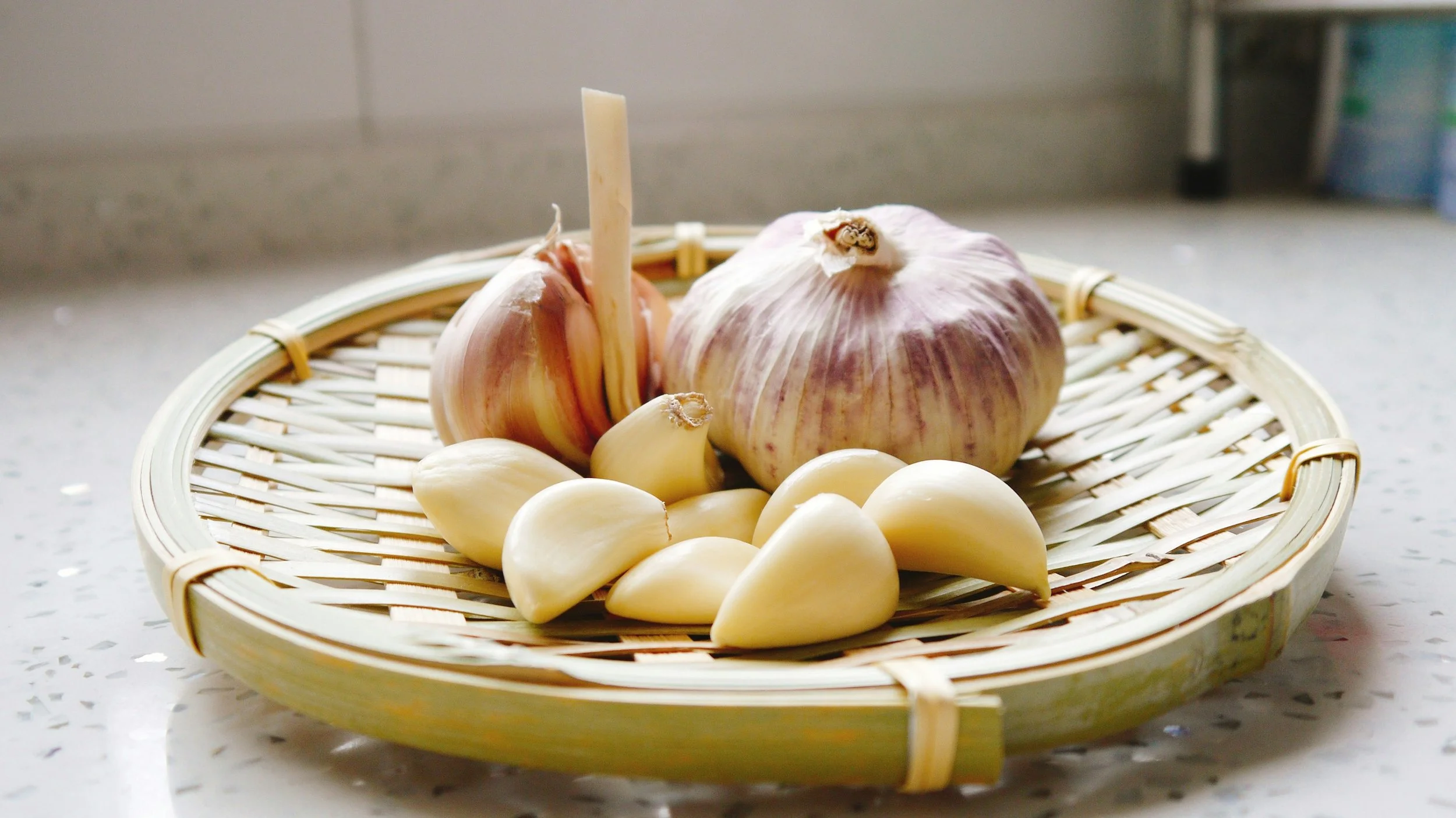
Garlic has been used as both food and medicine for thousands of years, across nearly every culture that could grow it.
Ancient Egypt. The Ebers Papyrus (around 1550 BCE) includes garlic in a number of remedies.
Greece and Rome. Hippocrates, and later Dioscorides, described garlic for digestive complaints, parasites and respiratory conditions.
Asia. Garlic appears in traditional Chinese medicine and in Ayurveda, where it has long been used as a warming, circulatory herb.
Early microbiology. Louis Pasteur is often credited with noting garlic's antibacterial activity in 1858.
In 1944, chemists Chester Cavallito and John Bailey isolated allicin and identified it as a major antibacterial compound.
The World Wars. Garlic was reportedly used as a wound antiseptic in both world wars, particularly when conventional supplies ran short. It earned the nickname "Russian penicillin" in the Soviet Union.
History tells us how garlic was used. Modern research is trying to explain why it worked.
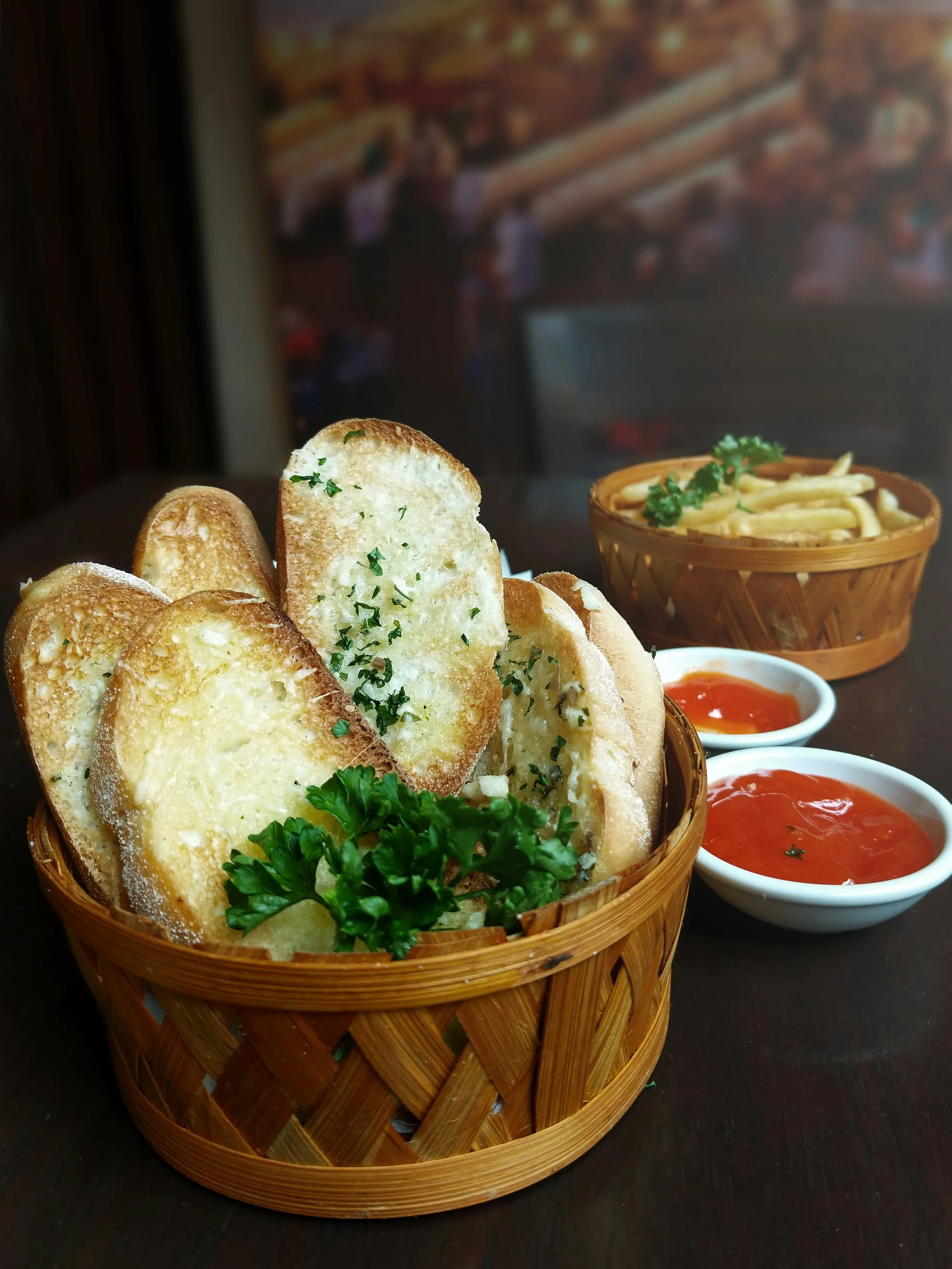
Allicin: made on demand, not stored
Allicin, a sulfur compound, is one of garlic's most studied active compounds. An intact garlic clove contains almost no allicin. It holds the ingredients for it in separate compartments, and allicin only forms when the clove is crushed, chopped or chewed. Crushing lets the enzyme alliinase convert a precursor called alliin into allicin To get the most allicin during food preparation, it is recommended to crush or finely chop garlic and let it rest for about 10 minutes before cooking. This is because alliinase is destroyed by heat and by strong acid. If whole or freshly cut garlic goes straight into a hot pan, the enzyme may be inactivated before much allicin forms.
Allicin is not the only compound that matters. It is unstable and quickly breaks down into other organosulfur compounds, including diallyl disulfide, diallyl trisulfide and ajoene, while aged garlic preparations are rich in S-allylcysteine (SAC). These compounds have their own effects
How Naturopathic Doctors use Garlic Clinically
Naturopathic doctors don't treat "garlic" as a single entitiy, but decide which form of preparation best fits a patient's goals. Fresh garlic, powders, aged extracts and black garlic have different chemical profiles, and each has been studied for different purposes. Clinically, garlic is most often considered in two areas: cardiovascular support (blood pressure, lipids, arterial health) and immune support during cold and flu season.
Allicin-yielding powders and stabilised allicin products are the form reached for when the goal is antimicrobial: acute colds, prevention during cold season, and sometimes as part of gut protocols for dysbiosis, gastrointestinal candida or SIBO.
Aged garlic extract (Kyolic) is the cardiovascular form: an adjunct for elevated blood pressure, arterial stiffness or plaque concerns, and borderline lipids. It is also used as a daily immune support rather than an acute antimicrobial.
AGE is made by soaking sliced raw garlic in a water-ethanol solution for up to 20 months. During ageing, the harsh, unstable compounds like allicin are converted into more stable, water-soluble ones. The main marker compound is S-allylcysteine (SAC), which is well absorbed and can be measured in the blood. The result is an odourless product with a consistent, standardised composition, which is part of why it has been easier to study.
Black garlic. tends to be positioned as an antioxidant or "longevity" food and a cardiometabolic support, sometimes as a gentler alternative for people who can't tolerate raw garlic.
Black garlic is made by holding whole bulbs at roughly 60 to 90 °C and high humidity for several weeks. The cloves turn black, soft and sweet, with a balsamic, molasses-like flavour. It is often called "fermented," but this is not fermentation by microbes. The changes come mainly from the Maillard reaction (the same browning chemistry as toasting bread) and from the breakdown of sugars and sulfur compounds under heat. Allicin and most of the pungency are lost, while S-allylcysteine (SAC) and certain antioxidant compounds increase compared with fresh garlic.
Garlic oil macerates show up mostly in traditional or pediatric use, such as garlic-mullein ear oil.
Other Topical use: Ajoene, a breakdown product of allicin, has been tested as a cream for athlete's foot in small trials, with results comparable to a conventional antifungal.
Garlic's long history as a remedy is now being tested by modern research, and the results depend heavily on which form of garlic is studied. The strongest human evidence is for aged garlic extract, which has been associated with lower blood pressure in people with hypertension and with slower progression of soft coronary plaque in small imaging trials.
References
Choo, S., Chin, V. K., Wong, E. H., Madhavan, P., Tay, S. T., Yong, P. V. C., & Chong, P. P. (2020). Review: Antimicrobial properties of allicin used alone or in combination with other medications. Folia Microbiologica. https://doi.org/10.1007/s12223-020-00786-5
Gardner, C. D., Lawson, L. D., Block, E., Chatterjee, L. M., Kiazand, A., Balise, R. R., & Kraemer, H. C. (2007). Effect of raw garlic vs commercial garlic supplements on plasma lipid concentrations in adults with moderate hypercholesterolemia: A randomized clinical trial. Archives of Internal Medicine, 167(4), 346–353. https://doi.org/10.1001/archinte.167.4.346
Jung, E.-S., Park, S.-H., Choi, E.-K., Ryu, B.-H., Park, B.-H., Kim, D.-S., Kim, Y.-G., & Chae, S.-W. (2014). Reduction of blood lipid parameters by a 12-wk supplementation of aged black garlic: A randomized controlled trial. Nutrition, 30(9), 1034–1039. https://doi.org/10.1016/j.nut.2014.02.014
Khoo, Y. S. K., & Aziz, Z. (2009). Garlic supplementation and serum cholesterol: A meta-analysis. Journal of Clinical Pharmacy and Therapeutics, 34(2), 133–145.
Lissiman, E., Bhasale, A. L., & Cohen, M. (2014). Garlic for the common cold. Cochrane Database of Systematic Reviews, 2014(11), Article CD006206. https://doi.org/10.1002/14651858.CD006206.pub4
Matsumoto, S., Nakanishi, R., Li, D., Alani, A., Rezaeian, P., Prabhu, S., Abraham, J., Fahmy, M. A., Dailing, C., Flores, F., Hamal, S., Broersen, A., Kitslaar, P. H., & Budoff, M. J. (2016). Aged garlic extract reduces low attenuation plaque in coronary arteries of patients with metabolic syndrome in a prospective randomized double-blind study. The Journal of Nutrition, 146(2), 427S–432S. https://doi.org/10.3945/jn.114.202424
Ried, K. (2016). Garlic lowers blood pressure in hypertensive individuals, regulates serum cholesterol, and stimulates immunity: An updated meta-analysis and review. The Journal of Nutrition, 146(2), 389S–396S. https://doi.org/10.3945/jn.114.202192
Ried, K., Frank, O. R., & Stocks, N. P. (2010). Aged garlic extract lowers blood pressure in patients with treated but uncontrolled hypertension: A randomised controlled trial. Maturitas, 67(2), 144–150. https://doi.org/10.1016/j.maturitas.2010.06.001
Ried, K., Toben, C., & Fakler, P. (2013). Effect of garlic on serum lipids: An updated meta-analysis. Nutrition Reviews, 71(5), 282–299.
Serrano, J. C. E., Castro-Boqué, E., García-Carrasco, A., Morán-Valero, M. I., Díez Municio, M., Bermúdez-López, M., Valdivielso, J. M., Espinel, A. E., & Portero-Otín, M. (2026). Aged-black garlic (Abg10+®) supplementation effect in blood lipoprotein profile in Grade I hypertensive subjects: A randomized, triple-blind controlled trial [Preprint]. medRxiv. https://www.medrxiv.org/content/10.64898/2026.04.20.26351262.full.pdf
Shaikh, K., Kinninger, A., Cherukuri, L., Birudaraju, D., Nakanishi, R., Almeida, S., Jayawardena, E., Shekar, C., Flores, F., Hamal, S., Sheikh, M. S., Johanis, A., Cu, B., & Budoff, M. J. (2020). Aged garlic extract reduces low attenuation plaque in coronary arteries of patients with diabetes: A randomized, double-blind, placebo-controlled study. Experimental and Therapeutic Medicine, 19(2), 1457–1461. https://doi.org/10.3892/etm.2019.8371